

Hawzah News Agency- The announcement was made during a press conference in Qom, where officials unveiled details of the "Collection of Research Topics on the Sciences and Teachings of Prophet Muhammad (PBUH)," a 12-volume work prepared ahead of the 1,500th anniversary of the Prophet's birth and coinciding with Islamic Unity Week.
The collection will be officially unveiled at the Islamic Unity Conference in Qom.
A historic transformation in 23 years
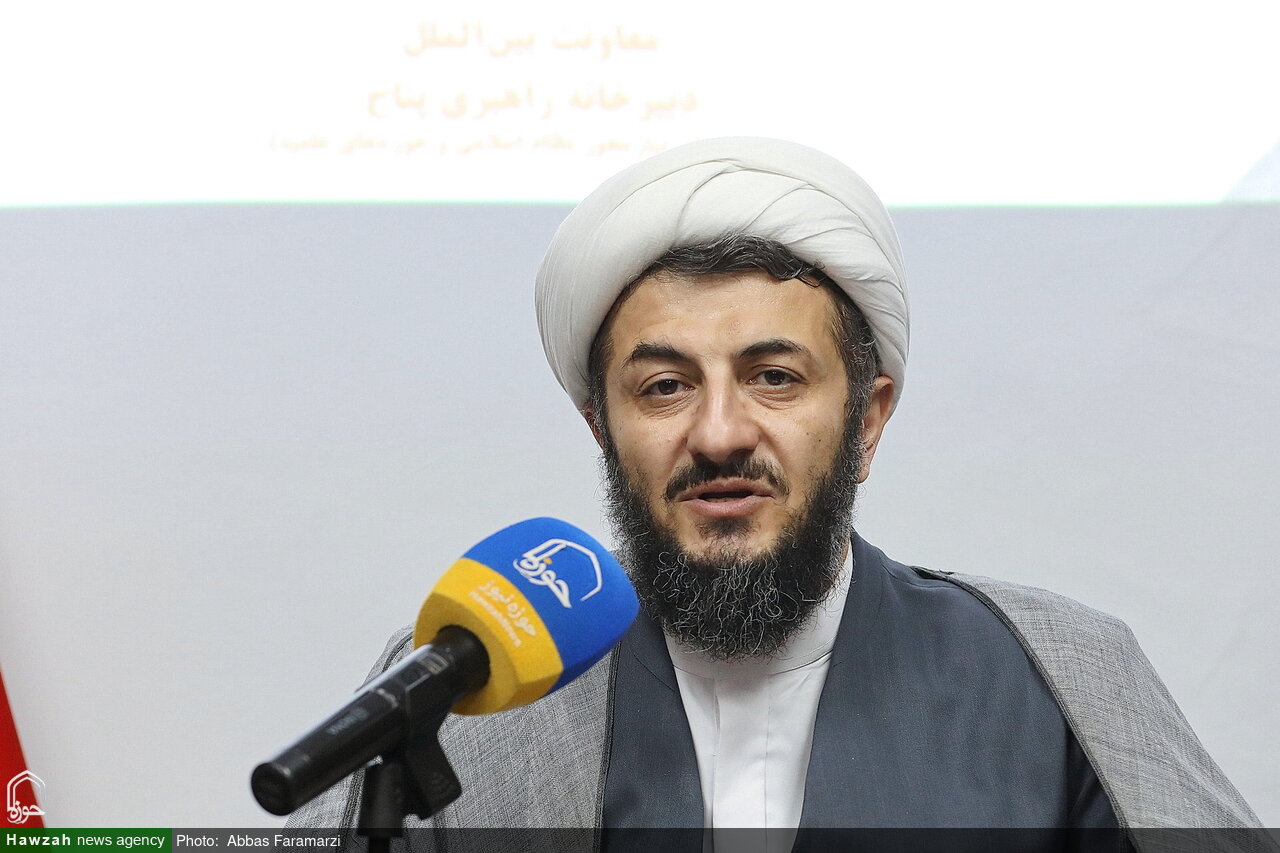
Hojatoleslam Farhad Abbasi, deputy for research at Iran's Islamic seminaries, opened the conference by describing the Prophet as one of the most neglected figures in humanity's intellectual landscape despite his unparalleled stature.
He noted that the Prophet emerged during what the Quran describes as the Age of Ignorance, yet within just 23 years of his prophetic mission, he transformed a barbaric society into a civilized one.
"Part of this transformation was due to divine support and the miracle of the Quran," Abbasi said, "but much of it stemmed from the exceptional character of Prophet Muhammad himself."
He stressed that the Prophet's mission represented the greatest event in human history, adding that a renewed reading of his life and teachings could address the challenges of what he called "modern ignorance."
"The Prophet is the Prophet for all humanity and all eras," Abbasi said. "Today, his message calls humanity to move beyond ignorance-driven life toward a civilized existence under divine light."
Research must go beyond libraries
The deputy research chief emphasized that scholarship on the Prophet must not remain confined to abstract academic work or library research.
"Research on the Prophet should extend his light, beauty, and character to the contemporary era," he said, stressing the need to address modern questions across scientific, social, and methodological fields.
Abbasi announced that the 60,000 research questions and topics had been identified, categorized, and organized based on contemporary challenges and inquiries about the Prophet.
He described the collection as a gift from the Qom seminary to the global scholarly community, saying the next phase would involve prioritizing topics and converting them into academic outputs including articles, books, conferences, and theory-building sessions.
1,500th anniversary: A turning point for global attention
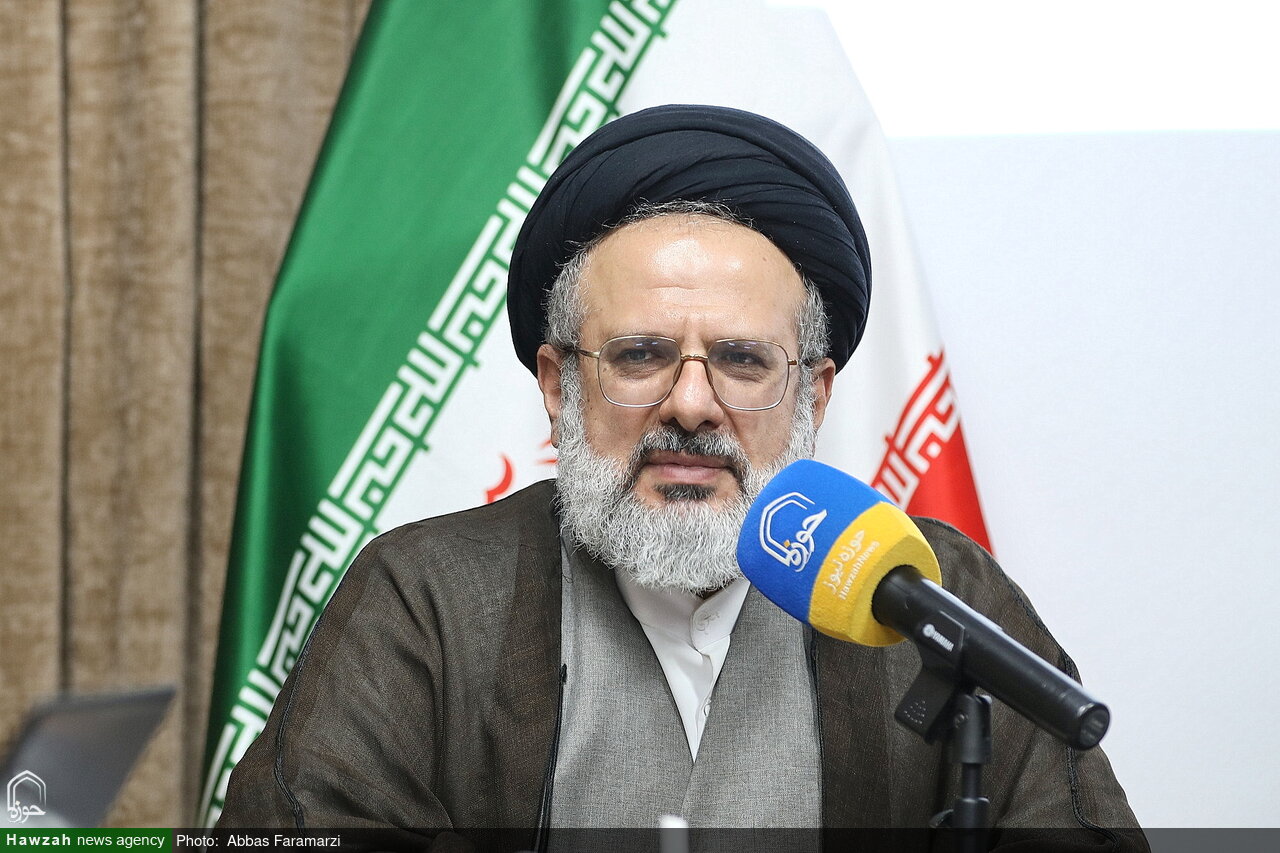
Hojatoleslam Seyyed Mofid Hosseini Kouhsari, deputy for international affairs at the seminaries, said the 1,500th anniversary of the Prophet's birth has become a turning point in global attention toward Islam.
He noted that the Islamic Republic played a key role in bringing the occasion to international prominence, with the secretariat for commemorative programs ultimately entrusted to Iran.
Kouhsari said recent global and regional developments — including the discourse of resistance, the defense of the oppressed, and the Palestinian cause — have created new openings for presenting authentic Islamic teachings to the world.
"The ideals that Western civilization has presented to humanity for years are now in deep decline," he said. "Concepts like human rights, women's rights, and human dignity have been exposed as double standards used to plunder nations."
He argued that the present moment offers a historic opportunity to present the Prophet's global discourses — including justice, rationality, spirituality, ethics, brotherhood, and human dignity — to the world.
114 dimensions of prophetic conduct
Hojatoleslam Seyyed Hossein Eshaqi, head of the secretariat for supporting research needed by the seminaries and the Islamic establishment, described the Prophet as a figure who divides human history into before and after.
"From whatever angle we look at Prophet Muhammad (PBUH), we see a shining point of virtue," he said, citing his ethics, courage, generosity, justice, and compassion as models for humanity.
Eshaqi revealed that he had previously worked on a collection examining 114 behavioral and verbal dimensions of the Prophet's character, emphasizing that the Prophet's actions consistently matched his words.
He said the research secretariat has produced approximately 320 works across 28 scientific groups since its establishment five years ago, including studies on the Prophet's management of public opinion, challenges facing the Muslim community, and his conduct toward opponents.
From 70,000 initial topics to 60,000 final titles
Eshaqi explained that the project began with roughly 70,000 initial topics, which were then refined to eliminate duplicates and categorized into 28 scientific fields including Quranic interpretation, civilizational studies, women and family, psychology, and educational sciences.
He highlighted the need for fresh research topics for academic theses and dissertations, noting that during a visit to Saudi Arabia he observed numerous studies on historical figures like Muawiyah, but comparatively little dedicated research on the Prophet himself.
A decade of work
Dr. Mansour Haji, the project's lead researcher, said work on the collection began nearly a decade ago, with the first three to four years dedicated to reviewing existing theses, domestic and international sources, and works from both Shia and Sunni traditions.
He noted that approximately 1,500 Quranic verses relate to the Prophet, yet this vast scriptural foundation remains under-researched.
Haji said the collection includes topics examining the influence of prophetic teachings on Islamic civilizations, including the Fatimid period, and on thinkers such as Ibn Arabi and Mulla Sadra.
He stressed that when insults are directed at the Prophet, the Muslim response should extend beyond protests to include rigorous intellectual and academic defense.
"Islam has the capacity to challenge major contemporary schools of thought in both the West and East," Haji said. "Defense of the Prophet must therefore take place in the scientific arena."
No duplicates among 60,000 topics
The researcher confirmed that all 60,000 research titles are unique, spanning 28 academic disciplines covering various fields of Islamic and human sciences.
He said an additional 5,000 titles with more specialized and practical approaches have been prepared separately and may be released in the future.
Haji expressed hope that the collection would foster a new civilizational and scientific approach to the Prophet's legacy, while also promoting academic convergence across the Muslim world.
He noted that some topics are specifically designed for international use, citing the example of research on the impact of prophetic teachings on family foundations during the Ottoman period and its relevance to contemporary Turkish society.
The collection represents a collaborative effort between the Qom seminary's research and international affairs departments and the secretariat for supporting research needed by the seminaries and the Islamic establishment.


Your Comment